I'm not a psychologist, just an average people watcher. But I'd like to talk about the things that create a person's worldview. This is mostly for authors to craft more realistic characters. I'll give some real world examples and allow you to think how your characters would be affected in their particular worlds.
The First Impression
Perhaps the most important, and certainly the most fundamental, determinant in defining worldview is the first impression. I've found that the first impression is the hardest to erase, even when presented with contradicting evidence. That's not to say it can't be done. In fact, we have some very good instruments in our toolbox.
Betrayal
Perhaps one of the most effective tools in erasing the first impression is betrayal. It may take ten times, it may only take once. Even when the betrayal turns out to be an unfounded rumor, the new impression remains stamped over the first impression. Sometimes the distortion of worldview occurs in interpersonal relationships, and sometimes it happens on a larger plane, for example with religion. E.g. "I didn't know that [historical religious figure] did [action]. Why didn't anybody tell me?"
Superciliousness
Also known as haughty disdain or arrogance. Betrayal is often, but not always, the overture to disdain. It's the feeling that "I have secret knowledge and am therefore better," or "anyone who doesn't realize what I do is mentally inferior." It can also be derived from advantage of physical/monetary circumstance, but I've found for the average person it's knowledge-based. These feelings are often gleaned from reading/hearing language laced with the following fallacies: argument by emotive language, appeal to spite, alleged certainty, cherry picking, definist fallacy, historian's fallacy, is-should fallacy (naturalistic), political correctness fallacy, overwhelming exception, proving non-existence (burden of proof), and many others.
Repetition
I think we all know it's a logical fallacy, but that doesn't stop us from falling for it. Argument by repetition, or argumentum ad nauseum, is the act of repeating a premise over and over to bolster its veracity. A fantastic example is, "Fat is attractive." We're hearing this argument more and more (and more and more ad nauseum) until we reach the point that we start to think, "Wow, I don't think fat people are attractive. Maybe there's something wrong with me." Taking a step back and assessing the situation, it's easy to see that ignoring millions of years of evolution to validate aversion to self improvement is unsound and not those who aren't romantically attracted to obesity.
Shaming/Humiliation
Often accompanying argument by repetition is argumentum ad verecundiam, appeal to shame, closely overlapping strawman fallacy, appeal to emotion, and argumentum ad hominem. Let's take our fat attraction example. Society wants to thresh us with shame if we don't experience romantic attraction to obesity, thereby trying to short-circuit our brains and remove us from a logical, biological context and thrust us into an emotional, irrational context. This is often accomplished by setting up the defending party's views as a strawman (a grotesque misrepresentation) and then trouncing it. They shame you by telling you that you're shaming them.
Conclusion
In conclusion, there are many other things that influence worldview, but I think these are some of the strongest points. For example, aphorisms and proverbs can change worldviews, but how often do you think the people reposting maxims on Facebook actually apply them to their lives? To craft more realistic, flawed characters, I encourage you to study logical fallacies and program some of them into your characters' worldviews. Challenging a character's worldview is easy and compelling conflict. I'll close with one that I really like, the sunk-cost fallacy. It's the erroneous assumption that since you've already invested so much in a project/idea you have to see it through to the end.
Edit: I might add more as I think of them, but another important one I thought of is Indignation, or more specifically indignation affirmation. This isn't so much a change in worldview as it is a deepening of one's current view. It occurs when someone takes offense at an opposing worldview and then invests more emotion into their own. This reeks of the sunk-cost fallacy and self-imposed appeal to emotion, but we all do it.
Bonus fallacy: Argumentum ad Homonym - when you try and use there instead of their.
Friday, July 24, 2015
Tuesday, July 14, 2015
Ruination of Transliteration: How Two Loanwords Changed History
Transliteration happens all the time. We often call them loanwords. Some examples from Arabic (remember, it reads from right to left):
- القرآن (Al-)Quran: The holy book of Islam. It's a verbal noun of the word قرأ (qar'a), meaning "he read" or "he recited".
- مسلم Muslim: A follower of Islam. Its meaning is "one who submits", derived from the verb أَسْلَمَ (aslama), meaning "he resigned". إِسْلَٰم (Islam) is the verbal noun meaning "voluntary submission to God". You can see the relation in the S-L-M root.
- Czech: dollar, pistol, robot
- Etruscan: antenna, arena, autumn, serve
- Old French and Latin: letter, person, budget
- Icelandic: saga, geyser
- Algonquin: Mississippi, Wyoming, Chicago, Illinois, Wisconsin, caribou, hickory, moose, muskrat, pecan, raccoon, skunk, squash
- Nahuatl (Aztec): avocado, cocoa, chocolate, coyote, guacamole, tomato
- Arawakan: barbecue, canoe, hammock, hurricane, potato, tobacco
- Various American Languages: cougar, cashew, bayou, manatee, igloo, kayak, jerky
There are many other loanwords that I didn't include (safari, zen, chi, zebra, luau, ukulele, guru, buddha, fjord, tundra, et cetera, et cetera), but I think you get the picture. We like to borrow words instead of translating them. A noteworthy exception to this rule is Icelandic, though more loanwords are creeping in. Instead of using a variant of telephone (a Greek word), they resurrected the word sími, an old word for "long thread". Another one is læknastokkrós, meaning marshmallow. As far as I can deconstruct this one, að lækna means to heal and stokkrós means hibiscus, a member of the mallow family. The healing hibiscus. They do this so that the new words will comply with Icelandic grammar.
Now that we've overviewed transliteration in English, let's look at two Greek to Latin transliterations that changed the world.
First, βαπτίζω, baptizo. This comes from the word bapto meaning to dip; therefore, baptizo means to immerse or submerge. This was all fine until around the fourth century when Latin became the primary language of Christianity. At that time, baptizo was transliterated into Latin. It was adapted to Latin grammar and changed to baptizare, making baptizo the first person singular present tense, i.e. "I baptize".
What this did is sever the tie between the root understanding and the definition. What was once understood intrinsically as an act of immersion became an act of mere ablution (ceremonial washing), and was altered to include aspersion (sprinkling) and eventually exclude immersion. The alteration of one holy ceremony is a beautiful precedent for further alteration.
Second, βιβλία, biblia. This is the plural of biblion, book. Once again, before the fourth century, the extant holy writings of Christianity weren't compiled into one body. Rather, they were a collection of texts called ta biblia, the books. As Latin became Christianity's primary language, they once again transliterated this word from Greek. Biblia is what they called them—it. To explain, Latin has a conjugation system that allows you to distinguish between singular and plural. What started as "the books" eventually migrated to take on the meaning of "the book".
What this did is set in the minds of Christians that canon was immutable post fourth century. You had the Book, what more could you need? Gone were the days when God could speak as He pleased through servants that He chose. Because who needs the Books when you have the Book?
Tuesday, July 7, 2015
How to Forge True Love: An Overiew of Relationship Investment
True love is found in the union of two people who never truly feel worthy of one another. Service and validation are imparted of freely and bounteously. True love is lost when an air of superiority seeps into that union; when at least one of the parties concludes they are entitled to the service and validation of the other.
True service can only be accomplished from a position of unpretentious humility and love. If a person feels angry and does something to benefit the other party, it's not actually to benefit the other party but themselves. If a person renders a beneficial act to another from a position of condescension, it's not service nor love but pity.
True love therefore is bred by true service. True service is not a thing to be tallied. It's not a contest of high scores and rivalries. It's a river that flows from your heart, buoying your partner up and carrying them to a sea of bliss.
You may assume that the reason service is the secret is because your efforts will endear you in your partner's eyes, but that's only a sliver of the reason. Most people, referring to the first paragraph, forget to return gratitude for nice acts, especially when acts of kindness are commonplace. No, what service does is it endears you to your partner.
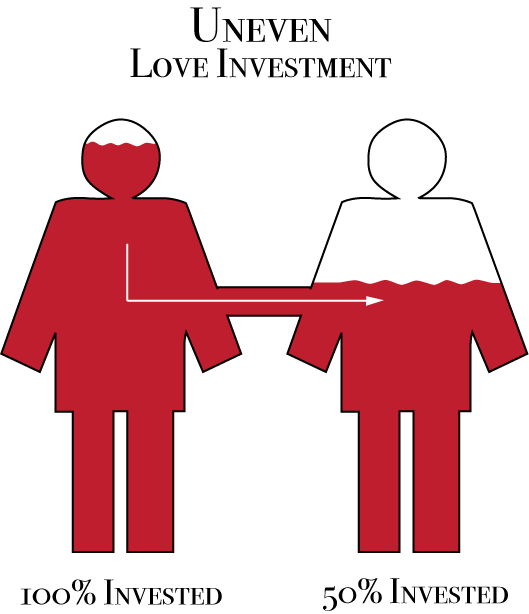
It's all about investment. The time that you spend with a partner is an investment, but even more important is the quality of the time. When the time you spend with them is consumed by transient cares or even brooding over areas in which you think they're lacking, that's like investing your money in fireworks. It's no surprise when it ends in flames. When your time with your partner is spent serving and building them up, that's like investing in a house. You expect many long, comfortable years with it.
Of course, you see the relationships where one person is making payments on a house while the other is building up their fireworks stockpile. Eventually the second person lights off their investment and burns the house to the ground. Make sure you don't miss the signs if your partner doesn't care about investing in you as much as you do in them.
In the end, that's the goal. You need to find someone who's willing to invest as much in you as you are in them. And that amount should be 100%.
Sunday, June 14, 2015
Oneironauts 2 Cover
So I had a grandiose idea about the cover of the second Oneironauts. It was going to involve nice cameras and paint in water. Unfortunately I couldn't muster a fish tank for the photos, so it turned out out to be only a dream...
It was at this point that I decided to take matters into my own hands. I fired up GIMP yesterday and came up with the following. It likely won't be the final draft of the cover, but it's a big step in the right direction. I'm going to try and finish everything tomorrow (interior included) and order a proof. If everything looks good, I'm going to publish These Apparitions next week. Until then, enjoy the cover. Please comment with any feedback.
Update 2 (6.18.15): The final cover is nearly complete. I just need to get a picture of my own model (as I don't have rights to the one I used). I'm in talks with some people right now, Hopefully I'll have the shots before the end of the week.
Update 3 (6.19.15): I ended up just using myself as the model for the cover. I would have preferred someone else, but meh. I can change it later if I want. I spent all day yesterday doing the eBook for book 2 and fixing the eBook for book 1. My proof is on the way, so it should be published next week! Anyway, here's the final cover:
It was at this point that I decided to take matters into my own hands. I fired up GIMP yesterday and came up with the following. It likely won't be the final draft of the cover, but it's a big step in the right direction. I'm going to try and finish everything tomorrow (interior included) and order a proof. If everything looks good, I'm going to publish These Apparitions next week. Until then, enjoy the cover. Please comment with any feedback.
FYI: the word count for this book is about 97,000 words. It will be 344 pages (not including front and back material).
Update (6.16.15): I've finished the interior. The chapter names took quite a while. Luckily I learned some good lessons from my first time around so creating the interior was a fairly smooth process. I also posted my cover on an authors' forum and have gotten some feedback which I'll be implementing.
Update 2 (6.18.15): The final cover is nearly complete. I just need to get a picture of my own model (as I don't have rights to the one I used). I'm in talks with some people right now, Hopefully I'll have the shots before the end of the week.
Update 3 (6.19.15): I ended up just using myself as the model for the cover. I would have preferred someone else, but meh. I can change it later if I want. I spent all day yesterday doing the eBook for book 2 and fixing the eBook for book 1. My proof is on the way, so it should be published next week! Anyway, here's the final cover:
Wednesday, June 3, 2015
The Unofficial Author's Contract
Series. We've all read them. And we've all read an under construction series, id est, an unfinished string of novels. It can be excruciating waiting for the next sequence of events concerning characters you've invested time and emotion in. At the same time, sometimes part of the fun is grouping up with other fans online and trading theories or commiserating. But sometimes you realize it's been several years, and still there's not much news about that next installment... What's going on?
I'd like to address what I term the Unofficial Author's Contract. It reads, "By publishing the first of a series of books, I, the author, do promise to complete the remainder of the novels in a timely fashion. I will honor this agreement even if I occasionally have to ignore other activities that seem more entertaining, and even if I grow weary of my own story and characters."
I finished the first Oneironauts in 2012 and published it in October 2014. I finished the first draft of the second book in March and just finished the second draft tonight. All together, it's about a 200,000 word sequence. I was going to school during the second one, which explains why it took 7 months to write, then I waited for finals to be over to edit. I will have physical copies before July, a 9-month turnaround from book to book. Part of what motivated me to keep writing even though school was pressing was the fact that I had people waiting for book 2. I was locked in the Contract.
Now there are writers like Martin and Rothfuss who have made big promises on books they will produce, but take great periods of time to deliver on those promises. Game of Thrones came out in 1996. The intervals for the next books are 1998, 2000, 2005, 2011, TBA, TBA. That's 5 then 6 years for two books, and it will be at least 5 for Winds of Winter. Rothfuss published in 2007 and 2011, and the third is TBA. So 4 years for the first gap, then at least 5 for the second. The reason why readers are annoyed with Rothfuss' output is that when the first novel came out, it was announced that he had the series complete.
For some contrast, I've compiled a small list (some word counts are estimated from page lengths):
Patrick Rothfuss
720,000 words in 9 years
George R R Martin
1,770,000 words in 20 years
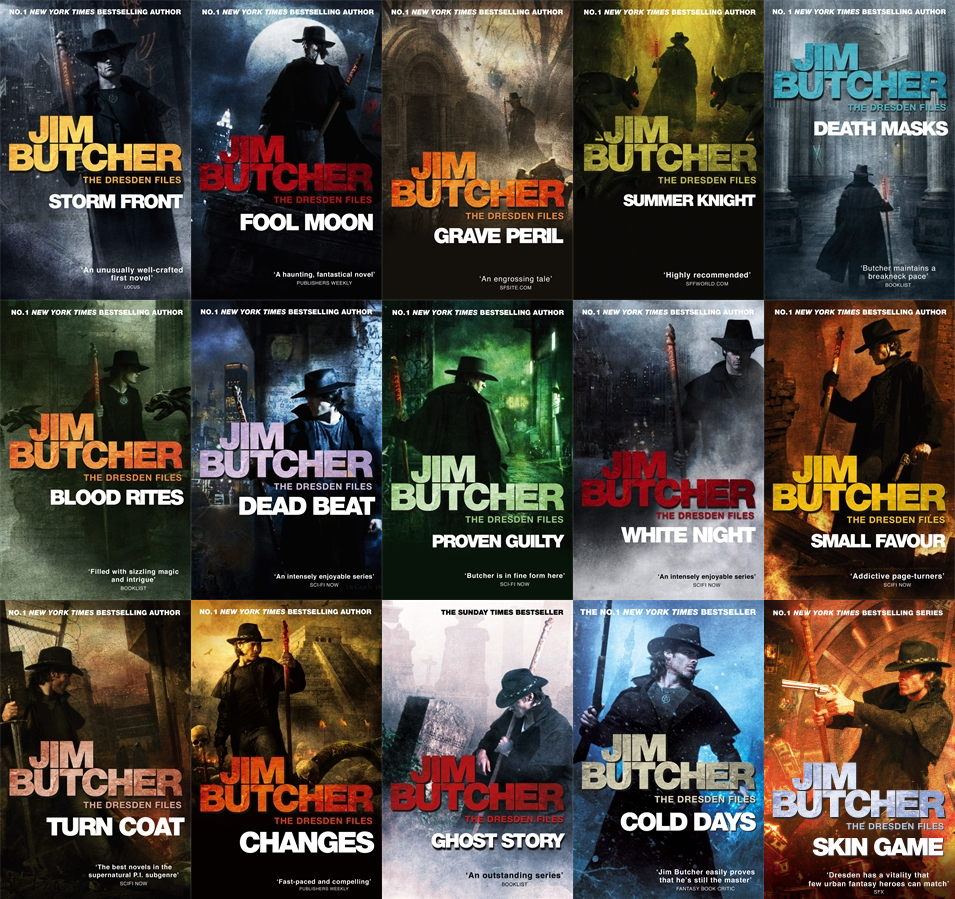
Jim Butcher
3,200,000 words in 16 years (not including his forthcoming novel)
Steven Erikson
3,300,000 words in 12 years (for the Malazan novels alone)
Robert Jordan
3,400,000 words in 16 years
Brandon Sanderson
3,900,000 words in 11 years (this is including short stories and Shadows of Self)
Now, all of these authors have put out a bit more than what's shown here, but the fundamental information is obvious. I won't speculate on the various factors that affect the authors' release schedules, but I will say this: Sanderson, Erickson, Jordan, and Butcher all consider their fans while they write. The fans are the only reason an author can write for a living. If you don't consider a consumer when creating a product, it will likely flop.
Let's draw a parallel to Google+. People were mental about G+ from about 10-4 months before it came out (I can't exactly remember). But Google kept doing invite only. Eventually buzz died down. Then they released it and it flopped marvelously. If they had put it out about half a year before, there would have been a massive migration over to G+. But they waited and people lost interest.
Books obviously have a longer timeline than social media, but honestly, the longer an author waits to deliver on a book, the more the hype dies down (generally). Martin is surfing on back catalog orders for the first five borne by the success of the TV series. Rothfuss is still riding on the fact that he was going to release the three books within 3 years of each other. Butcher, Erikson, and Sanderson however consistently put out new material that readers enjoy. They honor the Contract, and I love them for that.
Saturday, May 2, 2015
A Godawful Observation
Source: Rita Ip
In my various pursuits, I make a casual study of the Hebrew language. One thing that people acquiring a new language find is that it gives us insight into our own language. For example when I was learning Danish, I learned that the word for circumstance is omstændighed. Om means about or around and stænde roughly translates to stance or standing. Therefore omstændighed literally translates to "the state of things around one." If we break down the English word, circum is Latin for around or about, and stance comes from the Latin word stare, meaning to stand. So circumstance literally means "the standing of the surroundings." It wasn't until I learned the Danish that I realized the roots of the English.
There are many other insights that language learning can provide other than etymology. A conspicuous example finds place in slang. If you were to say "rock on" in Danish, it would literally mean there's a stone on...something. You haven't specified that yet. Another thing, you can say "rock on," but "stone on" comes with completely different connotations. In Danish to express coolness (and not the temperature kind), you say something is fat. "He's a fat guy" = "He's a cool guy/cat." It really makes you examine your own slang and realize how illogical some of it sounds.
But now I come to my Hebrew observation. The word el in Hebrew means god. It finds itself in many modern personal names, e.g. Michael, who is like God?; Daniel, God is my judge; Nathaniel, God has given. You also see its cognate in the Arabic Allah, a contraction of al-ilah (the (sole) God).
However, god or deity isn't the only denotation of el. It also means mighty. Therefore in places like Psalm 82 (which is poetry) you get nice little word plays.
God (elohim) standeth in the congregation of the mighty (el, could also be rendered god); he judgeth among the gods (elohim).Elohim is merely the plural of eloah, a derivative of el, and can be translated as God, gods, or powers. It is the name of God in the Old Testament (HEB: Tanakh). You can see here that the poet uses the different connotations of elohim and el to make a nice wordplay.
But all poetry set aside, learning this fact about the Hebrew language made me realize something about my mother tongue. I've heard the expression godawful a decent number of times during my life, but in light of this, it gave the expression a new depth. Something that's godawful is mighty awful, or so terrible that only an omnipotent being could create such a debacle. This makes it possibly the biggest hyperbole known to the English language.
Monday, April 27, 2015
The Beginning of God's Creations
A quasar via Wikipedia.
This post was inspired by a crazy Kolob theory, specifically one that said that God resides at the center of our galaxy and that the extent of his dominion is the fringes of the Milky Way. I'm here to prove that wrong. Deeply wrong.
Our friend Enoch, in Moses 7:30, says, "Were it possible that man could number the particles of the earth, yea, millions of earths like this, it would not be a beginning to the number of thy creations." The Milky Way contains perhaps 300 billion stars, 100 billion planets, 100 million black holes, and is about 120,000 light years across. The number of atoms in the Earth is about 10^50, approximately 10^40 times greater than the number of celestial bodies in the galaxy. Millions of earths would yield greater than 10^56 atoms. And that's not even the beginning of Elohim's creations.
It's estimated that the number of stars in the universe is about 7x10^22; we can round up to 10^23. If we want to be nice, we can say there are about the same number of planets. That brings us up to 2x10^23. If you factor in black holes and nubulae and stuff—being quite generous—you might have double that. That brings you to 4x10^23 astronomical objects, or not even .0000000000000000000000001% of the particles in the Earth (10^-25%). That means to not even reach the beginning of God's creations, you would need approximately 10^32 universes like ours.
For comparison, the sun is on the order of 10^30 kg (~1,000,000 times Earth's mass) and a pineapple is about a kilogram. If you were to compare a pineapple to the universe, you would need enough pineapples to weigh as much as 100 suns, or 100,000,000 Earths. In other words, 10^32 pineapples. One hundred nonillion pineapples.
And you would not have even reached the beginning of how many pineapples God has made.
Subscribe to:
Posts (Atom)