Showing posts with label writing tips. Show all posts

Friday, July 24, 2015

Worldview Building

I'm not a psychologist, just an average people watcher. But I'd like to talk about the things that create a person's worldview. This is mostly for authors to craft more realistic characters. I'll give some real world examples and allow you to think how your characters would be affected in their particular worlds.


The First Impression
Perhaps the most important, and certainly the most fundamental, determinant in defining worldview is the first impression. I've found that the first impression is the hardest to erase, even when presented with contradicting evidence. That's not to say it can't be done. In fact, we have some very good instruments in our toolbox.

Betrayal
Perhaps one of the most effective tools in erasing the first impression is betrayal. It may take ten times, it may only take once. Even when the betrayal turns out to be an unfounded rumor, the new impression remains stamped over the first impression. Sometimes the distortion of worldview occurs in interpersonal relationships, and sometimes it happens on a larger plane, for example with religion. E.g. "I didn't know that [historical religious figure] did [action]. Why didn't anybody tell me?"

Superciliousness
Also known as haughty disdain or arrogance. Betrayal is often, but not always, the overture to disdain. It's the feeling that "I have secret knowledge and am therefore better," or "anyone who doesn't realize what I do is mentally inferior." It can also be derived from advantage of physical/monetary circumstance, but I've found for the average person it's knowledge-based. These feelings are often gleaned from reading/hearing language laced with the following fallacies: argument by emotive languageappeal to spitealleged certaintycherry pickingdefinist fallacyhistorian's fallacyis-should fallacy (naturalistic)political correctness fallacyoverwhelming exceptionproving non-existence (burden of proof), and many others.

Repetition
I think we all know it's a logical fallacy, but that doesn't stop us from falling for it. Argument by repetition, or argumentum ad nauseum, is the act of repeating a premise over and over to bolster its veracity. A fantastic example is, "Fat is attractive." We're hearing this argument more and more (and more and more ad nauseum) until we reach the point that we start to think, "Wow, I don't think fat people are attractive. Maybe there's something wrong with me." Taking a step back and assessing the situation, it's easy to see that ignoring millions of years of evolution to validate aversion to self improvement is unsound and not those who aren't romantically attracted to obesity.

Shaming/Humiliation
Often accompanying argument by repetition is argumentum ad verecundiam, appeal to shame, closely overlapping strawman fallacy, appeal to emotion, and argumentum ad hominem. Let's take our fat attraction example. Society wants to thresh us with shame if we don't experience romantic attraction to obesity, thereby trying to short-circuit our brains and remove us from a logical, biological context and thrust us into an emotional, irrational context. This is often accomplished by setting up the defending party's views as a strawman (a grotesque misrepresentation) and then trouncing it. They shame you by telling you that you're shaming them.

Conclusion
In conclusion, there are many other things that influence worldview, but I think these are some of the strongest points. For example, aphorisms and proverbs can change worldviews, but how often do you think the people reposting maxims on Facebook actually apply them to their lives? To craft more realistic, flawed characters, I encourage you to study logical fallacies and program some of them into your characters' worldviews. Challenging a character's worldview is easy and compelling conflict. I'll close with one that I really like, the sunk-cost fallacy. It's the erroneous assumption that since you've already invested so much in a project/idea you have to see it through to the end.

Edit: I might add more as I think of them, but another important one I thought of is Indignation, or more specifically indignation affirmation. This isn't so much a change in worldview as it is a deepening of one's current view. It occurs when someone takes offense at an opposing worldview and then invests more emotion into their own. This reeks of the sunk-cost fallacy and self-imposed appeal to emotion, but we all do it.

Bonus fallacy: Argumentum ad Homonym - when you try and use there instead of their.

Friday, January 30, 2015

Emotional Investment and Return

When reading fiction, we look for one of two things (but probably two of two things): mental or emotional stimulation. I suppose there is spiritual, but that's generally classified into a different category. How good a book is hinges on the accumulation of mental and emotional points.

Now, all authors excel at some things and...excel less at others. Some are quite good at making magic with words (like Patrick Rothfuss). Others weave the plot so perfectly that you're reeling for days after you finish a book (like Brandon Sanderson). Others have many cool devices that keep you interested (like sci-fi). Most of these things accrue mental points during the reading. The prose that makes you think. The plot that blows your mind. The devices that intrigue. The political structures. The worldbuilding.

But there's another category in which to score points. This happens when you build compelling characters and convince us of how they react in a situation. Make us fall in love with that girl your protagonist is falling in love with. Make us laugh when a side character does something characteristically silly. Make us cry when loss occurs. Make us furious when the enemy prevails. Make us glory when the protagonist succeeds. Make us feel.

Here's the thing. Every book that you start reading is an investment. An investment of time and emotion. I'm committing to spending maybe ten hours with these characters; they had better well make my investment worth it!

Which brings me to the main point I want to make: POV character deaths. Let me describe exactly what an author does when s/he kills off a POV character. If you've done it right, I've developed an emotional bond with this person. If you've done it right, I'll be devastated when it happens. I might accept that it needed to happen, but that won't make me any less distraught.

Killing off a POV character, specifically the protagonist, is like having a spouse die or divorce you. It's someone you've grown to love, now they're gone forever. For POV characters with less ink to their names, it's like dating someone you love and getting broken up with. It's an important and powerful literary device and can be used very well and to great acclaim.

But imagine this: you start dating someone, even fall in love with them, but you're almost 100% positive they're going to break up with you. That might be okay once. You can take that emotional battering. But imagine there's a slew people waiting to date then break up with you. You're not going to want to go through that turmoil.

It's the same with killing off characters. If you kill off nearly every character you write, I'm getting crappy returns on my emotional investments. It's a tool, but like any tool, it can be over used. It can be the emotional analog to building up to a great climax, and then finishing with a lame cop out. I'm not going to want to read 200 pages about a ton of characters if I know they're just going to die at the end.

Just because something is realistic doesn't mean it's worth writing about. People browsing the internet for hours a day is real, but it would make a crappy book.


This post may or may not have been an A Song of Ice and Fire rant in disguise.

Friday, December 12, 2014

Making the Cut and Fictional Hormesis


Book lengths, who doesn't complain about them? I sure do. Sometimes they're too short, but I mostly find myself labeling them as too long. How useful and valid are such statements?

I thought of addressing this topic when I came across this statement in a two-star review of the Mistborn trilogy by Brandon Sanderson:
At around 700 pages per book, Sanderson (or his editors) got really bad at separating what's necessary for storytelling from pointless drivel. In book 2, for example, the first 500 pages could be summed up as city under siege, Eland is a philosopher and not a ruler, gets overthrown.

First off, I'm always interested in reading the contrary side of things. If I liked a book, it helps me understand people better by learning why they didn't. Same for any political of religious issue. I think a certain way, so what is it that convinces you to think otherwise? But sentence 2 quoted above clearly shows the reviewer's lack of understanding of prose.

You see, every single book that you read can be summarized. But that's not the point. No one doing leisure reading just wants the summary. It's all about engrossing yourself in the plot and going through experiences with the characters. When I read the line city under siege, I really don't give a hoot about it. But when I read the book and I know the characters, it comes alive and I feel a portion of what they (theoretically) went through. That's the power of prose.

But certainly there's a point where it becomes too much. I found myself thinking this as I read Name of the Wind by Partick Rothfuss. I definitely enjoyed the book, but I felt as if a little too much time was spent on unnecessary description. I think I would have enjoyed the book a fair amount more had it been 100 or so pages shorter. It would still be over 600 pages long, but the story would move just a bit faster.

In the end, it's up to the writer to decide when the story is far too pregnant or barren. That's a good way to think of it. I've read some stories that were so pregnant I got morning sickness. I'm just sitting there thinking give birth already! But at the same time, you can strip any story down until it's just a plot summary. There are things that I write that don't straightway contribute to the plot, but they contribute to the overall experience. A good author knows when the threshold is crossed where these ancillary anecdotes start detracting. This is called hormesis, or the too much of a good thing model. Figure out how it works.

Thursday, November 20, 2014

Word Count Creep

Writing a book can be is a daunting task. Depending on your goal, you have anywhere between 50,000 to 400,000 words to type when crossing the threshold of your journey (hopefully you have the decency to constrain your prose to a length not too much higher than that). It's easy at any step in the process to lose momentum and become swamped. I want to talk about some of the writing cairns and how to get past them.

Initial Word Count Goal

I'm a numbers-oriented person. I like to have a goal in mind when embarking on most any endeavor. I think it's important for any writer to have a ballpark on their total word count. Some people may find this irrelevant and take care of it in editing, but I often prefer pre-editing over post-editing. Anything I can do to reduce work on the tail end is beneficial.

The way that I got a ballpark for my first book was precisely by looking up word counts of novels that I had read. Out of interest, here's a list of some popular book word counts. Another thing I took into account was the industry recommendations. Here's a page with a good meter.

Important also is whether you are debuting or returning to the scene. When people pick up a Dan Brown book they think, "I've read/heard of his books. I'll give this one a shot." When people see a Benny Hinrichs novel they think, "Cover's not terrible. I wonder if he's related to Jimmy Hendrix." Two different reactions. Reading a novel takes time (probably at least 10 hours). You have to convince people that your words are worth that time investment, and most people will shy away from a thick, bludgeoning tome from an unknown author.

Of interest: I wanted my first book to be somewhere between 90,000 to 105,000 words long. It turned out to be 101,000. I only achieved that by outlining and estimating.

Progress Spurs Progress

Another driving principle is that progress inspires progress. It takes hundreds of small victories to write 100,000 words. I keep a spreadsheet of my chapter word count. Every time I finish a chapter, I note the date and length along with a running total. Here's the spreadsheet of my word counts for Schools of Thought. The first time you hit 1,000 words, you think, "Wow, that wasn't all that bad. I can do that a few more times." Pretty soon you've laid out 5,000. Then 10, 20, 50, 100. Knowing that you've already accomplished something will drive you to accomplish something else.

You should find a progress monitoring method that jives with you. I do word count by chapters. Another idea is progress by event or scene (like you're shooting a movie). For that you need to have a pretty good outline.

Working Word Count Goal

Another trick of the trade that helps me immensely is a working word quota. That is, in x amount of time I will produce y number of words. My current working word quota is 2500/week. I like to use the week increment rather than day or month because it gives me enough time to do it without giving me too much time to do it.

Parkinson's law states that work will expand to fill time available for its completion. If I saw that I'll do 2500 words in a week, I may do all those on Saturday, but it gets done. If I say I'm going to do 500 words a day, I have a higher possibility of missing that goal due to other obligations. That will lead to writing depression and will encourage me to miss future goals. If I say I'm going to do 12,000 words a month, I'll inevitably go a whole week or two without writing anything. Suddenly I have to write 6,000 words a week  for two weeks straight. It's too onerous. Just as progress incites further progress, failure incites further failure. Thus my 2500/week.

Conclusion

Small victories win large wars. Set realistic goals and meet them! I'd like to add here that outlining will help everything. Maybe I say this because I'm not as much of a discovery writer, but I truly believe it. If I already know what's going to happen in a chapter, it's so much easier to write. Same holds true for a book. If you know where you're going, it'll be easier to get there.

Tuesday, September 2, 2014

The Flaws of Harry Potter

This is a subject that many of my generation find blasphemous, but I assure you that this post is purely academic. It's a worthy pursuit to identify things that successful authors did poorly in order to avoid them. Let us begin.

The Goblet of Fire Plot Hole
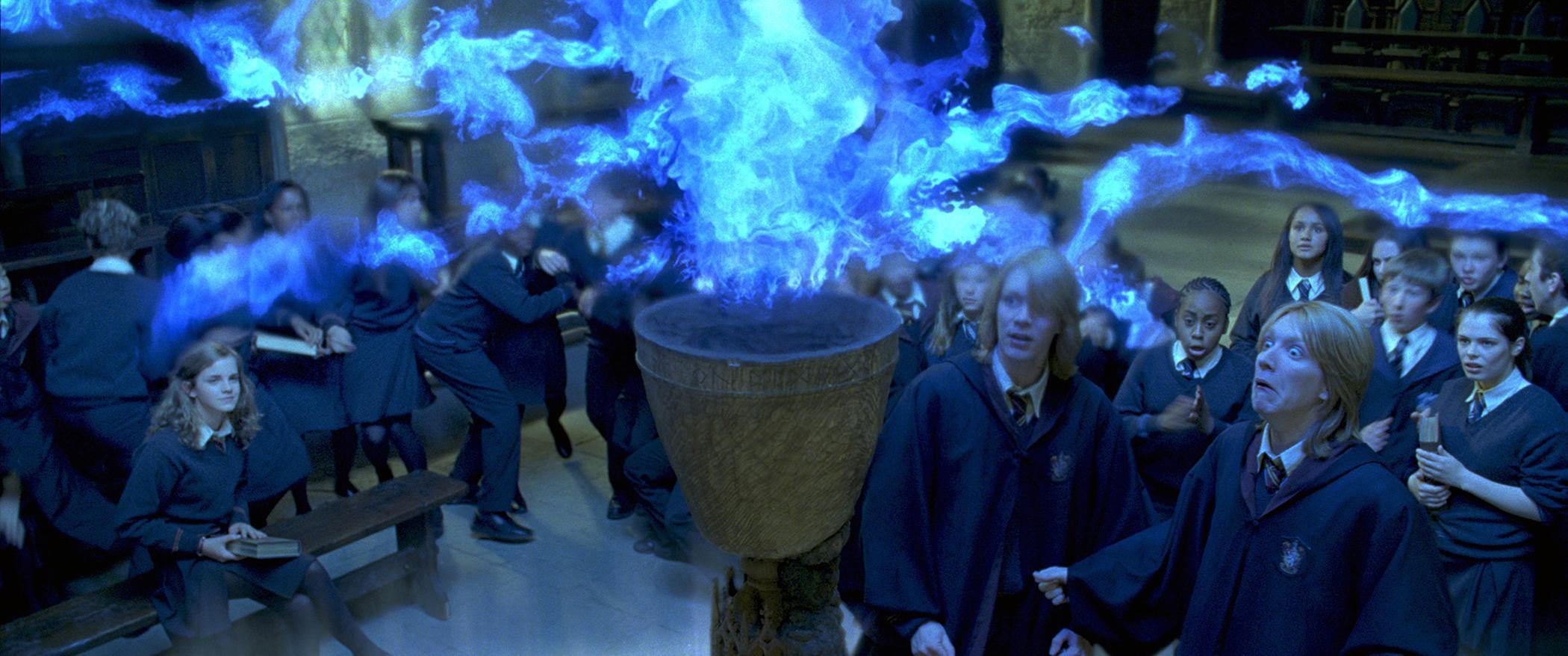
One of the most blaring mistakes of the Harry Potter series is book 4. The entire plot of the book rides on the idea that the Death Eaters have to get Harry to touch any object. That is to say, a portkey can be any object, and Harry just has to touch it outside the walls of Hogwarts. So instead of having a Death Eater come up to Harry at the Three Broomsticks and give him some present, they decide, "Let's make it one of the single most difficult objects to touch in the wizarding world."

Voldemort wants to kill Harry. But first he needs Harry's blood to be able to kill Harry. We need to keep him alive so we (or more specifically I) can kill him. I feel like a whole lot of trouble could be bypassed by just killing him, then resurrecting Voldemort. Maybe that was the Death Eaters' plan. Put Harry in the Triwizard Tournament and let him die accidentally. Or not, they seem pretty fawning. The point is, don't make an entire book based off a plot hole. Examine your characters' motives before making a plot (and after).
Hm, this picture appears unwilling to show up. It's rejecting my accio picture command. Another flaw of Harry Potter: I've never gotten any of the spells to work.

Time Travel
A classic way to fill your plot with holes is to introduce time travel. Now, Rowling tried to patch this up in book 5 by sending the time-turners into an infinite loop of getting knocked over, thereby rendering this useless. But that doesn't cover up the fact that they existed for a long time before then.

That means that for every crime committed, the Ministry could just take time turners, go back, and prevent it. Pretty useful, eh? Every single event that they weren't pleased with, they could revert time and change the course of events. For example, the murder of Lilly and James Potter. Why don't we go back and stop Voldemort, or at least warn the Potter's so they can flee? No, no, let's save Buckbeak. (I'm talking more about Dumbledore at this point.) The point is, don't introduce time travel unless you put limitation on it.

Voldemort: The Most Powerful Wizard in the UK
For how infamous and powerful the Dark Lord is, his reach doesn't seem to extend very far past the UK. I don't know that this is a huge flaw, but you'd think that a sociopathic megalomaniac would want to rule more than just one country. One might counter argue that he was still in the process of conquering the UK when he got zapped by Lily's love power. Not a flaw per se, but it just seemed like the villain had a relatively small vision to me.

Another issue with the geography of things is why did the Potter's feel the need to hide in the UK? I'm sure there are hundreds of other wizarding communities (where Voldemort has seemingly no reach) that would willingly hide them. But no, they decide to hide with the bomb instead of away from it.


The Magic System
So then there's the magic system. Rowling just kind of improvises new bells and whistles as she goes along. Then in later books she might completely ignore an element of magic that was so interesting in previous books.

It also seems as if you could just learn Latin and become a master wizard. Why don't they teach Latin at Hogwarts (I mean, they do, but it's broken up). And who decides when you can make new spells? Snape just kind of comes up with a sinister, powerful one as a student. Why hasn't Hermione made a list of her own inventions?

Why do spells have to be generated from the wand? Powerful wizards don't have to use a wand to channel their magic. Why, then, couldn't they originate a spell right in front of someone's face?

Another qualm I had was how Harry only learned like 3 spells his entire 6 years at Hogwarts. I expected him to become a great wizard. In the end, he won off a fluke of wand ownership. Rowling defined dueling magic as the quickest and wittiest wizard will win. But instead of using that definition, she had Harry win because one time he disarmed Malfoy. It was clever, but I didn't feel it was terribly satisfying.

Love Magic (Sacrificial Protection)
Ah, perhaps one of my biggest issues. The love magic. Rowling uses an a priori assumption that love trumps all, but never goes into too much detail. The basic rules of love magic, or sacrificial protection, are die for somebody and they get arcane protection against your killer. So my question is this: why is Harry so revered? Has no one ever sacrificed themselves before? This sounds like a documented phenomenon, yet the entire wizarding world seems oblivious to the fact, naming him The Boy Who Lived. I find it hard to believe that so few wizards have ever sacrificed themselves that the entire community views this as incredible.

And the second part comes when Harry invokes the powers of Sacrificial Protection. He goes to Voldemort who kills him. Then all the good guys back in Hogwarts are protected from his (and somewhat from his cronies') magic. But here's the thing: Harry didn't die. Dumbledore explicitly states this. If he did die then it would be breaking the Rule Against Resurrection when he came back.

But that means that you don't actually have to die in order to access the Love Magic. So another question that gets brought up is are there other acts of love that would activate the Love Magic? I suppose we'll never know.


Other Random Flaws
The Potter universe also seems to completely disregard the existence of modern weaponry. That was likely on purpose, but Harry and Hermione lived with muggles for years before learning about magic. Of course they know about guns, planes, bombs, tanks, etc. Why doesn't Harry keep a glock on him for the next time he meets Voldemort? Imagine the battle in the fourth book: their wands connect. Voldemort is distracted. Harry pulls out a 9mm and pops a cap. It's suddenly a 4-book series.

In the telling of the Deathly Hallows, we learn that one can hide from Death with the invisibility cloak made by Death himself. But somehow a group of teenagers made a map that can see through it. Perhaps Death should have hired the marauders.

Liquid luck, or felix felicis, will purportedly give the user a perfect day. Why didn't Harry and the gang brew some of that up and down it once they came up against Voldemort?

Another thing that was always an issue for me was that when Harry said a phrase that closely resembled Diagon Alley (maybe even how some dialects would pronounce it), he was transported to a place called Knockturn Alley. Diagon, Knockturn. Di, Knock. Is magic so stupid that it can mistake the two?

This isn't exactly a flaw and was touched upon above, but what's the deal with wizards outside of the UK? We see a bit of that in the 4th book with the two visiting schools and the World Cup, but what about continents beside Europe? I understand this topic is briefly discussed in non-series books that I haven't read, but you think there'd be more of a mention. What did wizards of the Plains Indians do in the early second millennium? What about Mayan wizards? Aborigine wizards? African? It's not vital to know, but it would have been nice if the topic were addressed. It could come in a passing comment by Hermione. "We can't reveal ourselves, Ron. The ancient wizards of Mesoamerica did just that and they ended up controlling the people."


In Conclusion
All in all, the books are fantastic. This was merely an exercise to show how even great authors can forget elements they introduce and leave loose ends. They can get caught up in a story and not realize that the plot they're writing is unnecessary. They forget motives. They make a priori assumptions. They ignore facts. They capriciously make and break rules. And we loved it. This is not a ticket to go and do all those things

Friday, August 29, 2014

Building Up Your Repository of Awesome

In the process of coming up with a good plot, you may have encountered some difficulty. Maybe you're hypercritical of every idea you get. Maybe you designed a plot only to realize that it's not particularly interesting. Maybe you always get halfway and then peter out. Allow me to introduce you to a system that you hopefully already utilize.

I call it the Repository of Awesome. It's essentially a document you keep (on MSWord, GoogleDocs, &c.) where you dump all the cool ideas you get. For me personally, I have a section for concepts (philosophical points), lines to use, settings, characters, points of action/conflict, and a miscellaneous category. I have a general document that can be harvested from for all my books, and I have book-specific documents. For example, in the repository for The Oneironauts, I have a list of forms for the Consortium Oneirautis. That was important for that specific book, but not really useful in my other works.

Show Me How It's Done
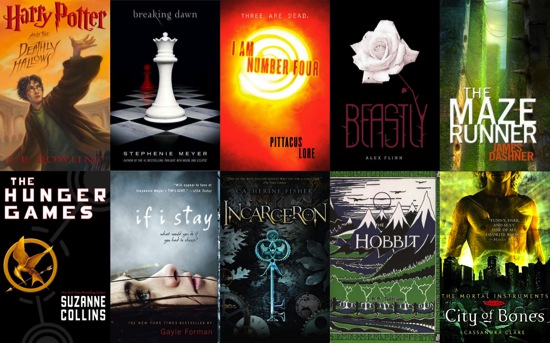
Where do you look for sources for this Repository of Awesome? Basically everywhere. Movies, books, sites you visit, people you interact with. You liked the idea of a clandestine magical institution from Harry Potter? Great, write it down. You liked the excavation labor camp from Holes? Write it down. Thought the idea of humans interacting with a pantheon of gods from Percy Jackson was cool? Put it on the list. How about the sudden death survival tournament from Hunger Games? Note it.

Source: Dead Darlings

Now this is where the magic happens. Combine your ideas. Let's see... A young man is enslaved at a labor camp in some remote mountains. There are dueling tournaments once a month. They select several random inmates and have them fight to the death. The last ones standing get spirited away. Protagonist is selected for the tournament and wins. Turns out they get taken to a secretive monastery/school where they are taught magic directly from the gods. They then get placed in society where they serve as vassals for the gods. A group of former graduates has rebelled and is planning a coup against the gods. Our protagonist has to decide whether he wants to join the resistance or the establishment.

See? I literally churned out those two paragraphs of ideas and then plot in less than 8 minutes. I'm not saying it's the best plot ever invented, but it's entirely different from the four sources I drew upon and slightly catchy. I promise that you can create amazing plots by amassing all your awesome ideas and combining them. Remember that good conflict is going to be the most crucial part of your plot. I would give you some examples from my own writing, but it's not published yet, so I'll wait.

I would also like to point out that if you have an okay plot already but you don't think it's up to snuff, treat it as an extended idea. Then take other ideas from your Repository and layer them together.

Your ideas are mostly just seeds and will flourish as you actually write the book. I had the original idea of "shared dreaming school" and it evolved immensely over the time that I wrote The Oneironauts. Another thought that I had was "what if one of the characters was in a coma?" Obviously that specifically applies to the dreaming books and isn't so much a general idea, but it ended up becoming an entire subplot in my book. I hope you can do the same.

Tuesday, August 26, 2014

The Everbranching Tree of Plots

Ten years ago, an idea was introduced to the world called the Seven Basic Plots. It came in the form of a book written by journalist Christopher Booker. He posited that there were only—as the precocious reader will have already observed—seven basic plots. Every other story is based off this brotherhood. He tells us that they are
  1. Overcoming the Monster (Lord of the Rings, Star Wars)
  2. Rags to Riches (Cinderella, Aladdin)
  3. The Quest (Lord of the Rings)
  4. Voyage and Return (Odyssey, Alice in Wonderland)
  5. Comedy (A Midsummer Night's Dream, Mr. Bean)
  6. Tragedy (Macbeth, Romeo and Juliet)
  7. Rebirth (A Christmas Carol, Despicable Me)
*As a side note, I think that if you wanted to you could lump most of them into Overcoming the Monster.

Well I'm going to present my new thesis: there's only one plot, i.e., Something Happens. It holds true in every book I've read or movie I've seen. This superplot can be subdivided though. In many stories not only does something happen, but more specifically, the protagonist progresses. The other two options are remaining stagnant or retrogressing. All of the above seven plots are composed of the three I just mentioned. That means there are at most three basic plots.

But "he progresses" doesn't exactly make for the most exciting plot. It needs an arc. The bones of a plot might follow something like this: he progresses, stalls, progresses, stalls, retrogresses, progresses, retrogresses, progresses. Maybe you could even assign values so you know how much the protagonist is stepping forward or backward. Let's analyze the Bible story Jonah this way. He's preaching as a prophet of Jehovah (+10). Gets a vision to go to Nineveh (+5). Decides to run and hide from God instead (-15). Get swallowed by a great fish (±0). Repents and preaches in Nineveh (+15). Stubbornly waits for the city's destruction after they repent (-15).

Beyond the Basics
But who wants a basic plot? Like a drug, we need more and better stuff to stay satisfied. Most plots that I've read in the past ten years go above and beyond basic. They've also been combinations of the above seven. They've been intricate weavings of human emotion and action. 
Source: Tim Green
This post may not have the best flow to it, but I hope it gets my point across. If you believe there are only seven basic plots, your writing will show it. Don't buy into it. Look everywhere for inspiration for books. Write down small ideas you have. Combine those ideas to make more elaborate tales. Don't let your plot look too much like another, but allow it some similarity. The tree of plots is an everbranching organism with unlimited possibilities. 


Saturday, August 23, 2014

The Curse of the Cliffhanger

The cliffhanger is a hallmark literary device. When employed correctly, it spurs the reader on to the next section of book. When used incorrectly, it buffers the reader into a corner of frustration. I have read books that swing both ways. Let's talk about avoiding your books leaving your readers' hands at high velocities by proper application of the cliffhanger.

Writing is an art, and as such it uses themes. Any theme in any artform can be overdone. Let's take the example of the band After the Burial. They had a fantastic debut album with sweeping guitars and complex polyrythms. More recently, perhaps in an attempt to be more brutal, they have somewhat dumbed down their song structure. In this cover video, the parodist shows that although the original musicians performed the number on 8-stringed instruments, he can pull off the entire song on one string.

You may think of cliffhangers as an exciting element to utilize in your book, but make you think about it more than once. After a while of chapter after chapter being strung up on some inhospitable cliff, the reader is tired and perturbed. Good job, writer. 

Where It's Particularly Painful
Now, the effect isn't that bad if you have the events immediately after the break, or if you have a short sequence in between. Much of the time you can get away with entire interloping chapters. But don't string your readers up over three or four chapters on a cliffhanger, particularly if all the intervening chapters end in cliffhangers of their own. If you want an example of this, read the Secrets of the Immortal Nicholas Flammel series. It's well constructed, but it becomes splintered at the end and—you guessed it—he makes every chapter a cliffhanger.

It goes something like this: Kendric is flying in a plane. Suddenly there's a big boom. An engine has exploded. End chapter. Alfie is walking down the street. A car pulls up, window rolls down, and a gun is pointed at him. End chapter. Pamela is awoken by the sound of scratching at her door. The door bursts open. End chapter.

The plane is heading to the ground. It hits. End chapter. Alfie tries to soothe his attackers. They roll down the back window. His sister is bound and gagged. End chapter. Pamela rolls off then under her bed, grabs her pistol, then listens to footsteps walk up to the bed. A masked face peaks down and says, "Hello, lovie." End chapter.

Kendric survived and is in the forest. A snarl. Wild beasts attack. End chapter. Alfie gets instructions to place a package where the people want it by a certain time. They drive away. He opens it up. It's a live bomb. End chapter. Pamela draws upon years of training and shoots. The bullet bounces off the mask. Something grabs her leg from behind and starts dragging her. End chapter.

Now imagine that all of those were fully flushed out chapters and you had to go through 2000-6000 more words before you could find out what happens next, every single time. It's torture. Ways to avoid agitation against you, the author, is to reduce time between stop and go, reduce cliffhanger usage, or use a light cliffhanger. 

Obviously don't let this scare you away from using the cliffhanger, just become more conscientious of the frequency, intensity, and execution. It's a beautiful device, but it reacts like makeup when you cake too much on. And most importantly...actually, I'll leave that for my next post :)

Monday, August 11, 2014

The Final Fluff Fight

First, welcome to the place I've deigned to deposit my ruminations upon such possible topics as writing, music, physics, religion, et cetera. Now you know. And since this post is about burning fluff...

Fluff. It's an essential part of every story. Without it the result is bone grinding on bone. Fluff is like the cartilage of literature. But imagine trying to walk with 5 inches of gristle between your femur and tibia. Your locomotion would be extremely unconventional. The same holds for writing. 

A good story can be drowned in excessive fluff. It can also get dehydrated from lack thereof. Our job as writers is to find that golden meridian and promenade down it. To illustrate, we generally type ourselves into one of the following situations:
  1. Alright, Tyson is in the cave and now he needs to get the dagger. Run Tyson. Grab. Good. Stab troglodytes. Escape. Hey look, Tyson got out safely! Done.
  2. Well, I've led Tyson to the mouth of the mountain and now he needs to swipe the dagger. But how are my readers going to know that this is a cave unless I sequence the molecular bonds on every stalactite and guano streak? And what about the several drippings? They must know how the stalagmites formed over the past million years! How else are they going to appreciate that the troglodytes are hiding behind them? AND THE TROGLODYTES! The readers must become familiar with their hygiene, temperament, and breeding habits in order to truly understand the danger Tyson's in.
I'll stop there. You've probably been in one of these two boats if you've ever written a scene. 1) I know what happens next and it shall occur immediately; or 2) the details are churning inside me like a gallon of ingested phlegm and must be vomited out extensively. Ooh, is that a thorn-encrusted salamancer?

Before the inventions of the television, computer, and internet, authors tended much more toward the second inclination. That's why the average survival rate of works such as War and Peace is only 15%. Even some of the more streamlined classics can get their drag on. Fast forward to TV and the internet. The average citizen thinks: I award my full attention to everything in the world. I'm not going to dedicate my time to a novel unless it gives me as much enjoyment as the Youtubes. That requires us as authors to change our game.

Introducing: show, don't tell. I quote Orson Scott Card on exposition:

"When science fiction was just beginning, it was common for writers to stop the action in order to explain the cool new science or technology that they were introducing in the tale. It was not until Robert Heinlein that science fiction writers began to weave their exposition more subtly into the action of the story. The classic example is when, in telling of a character leaving a room, Heinlein wrote, "The door dilated." No explanation of the nifty technology behind dilating doors -- just a simple statement that seems to take the new technology for granted. This was a great step forward, allowing science fiction writers to introduce a vast amount of novelty into a story without stopping the forward movement of the plot in order to explain it."

One method of fluff reduction as shown here, is to replace a description with a verb. It's highly effective. Also, it doesn't deplete the richness of the narrative. Look for opportunities to explain the backstory during the nowstory, but don't impede the nowstory in order to do so. Slip it in. Gentle accents.

Good fluff. But sometimes you want to include something that's non-essential to the plot, yet still entertaining. Feel free! Just don't drown yourself in such excursions. An author I think does this quite well is Obert Skye. Here's an excerpt from the fifth Leven Thumps that I remember even though I read it 4 or 5 years ago.

Leven shrugged. "That's not important; we should find Tim."
"I would have mentioned them leaving," Clover said. "But Tim was pretty insistent about me staying quiet. He said they were taking Azure because he promised to show them the way."
"So you saw them go?" Winter asked incredulously.
"I was writing in my dream journal," Clover said defensively.
"At two in the morning?" Leven asked. "Why didn't you tell us they had left?"
"I had an interesting dream," Clover insisted. "What does it mean when you dream about barns?"
Leven and Winter just stared at him.
Alright, so it's not the fluffliest bit of fluff, but it works. Skye could have just explained that they woke up and saw that Tim was gone, so they started following him. Instead, he created a situation that became a memory for at least one reader. That's good fluff.

At the end of the day, your readers want a ravishing tale with some spicy details, not a spicy mess with little substance. Give them what they want, or they will punish you.