Showing posts with label plot. Show all posts

Wednesday, February 28, 2018

A Better Ending to Harry Potter


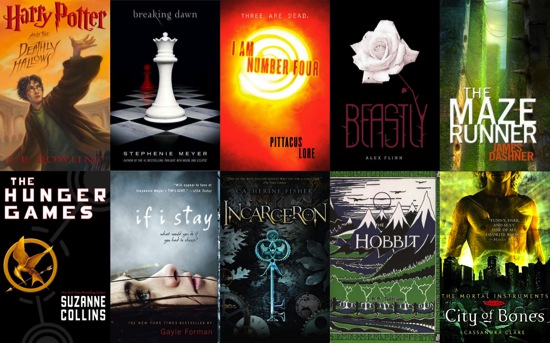
Harry Potter had some great characters, ones that compelled you to read about them. The worldbuilding isn't too special. We've seen magical boarding schools, saying cantrips to invoke magic, using a channeling agent (wand) to perform magic, centaurs, trolls, potions, divination, herbology, teleportation, transfiguration, etc., etc (quidditch, however, was an excellent innovation). In many places the worldbuilding is just awful. For example, in a world where the government controls a reliable method of time travel, there should be no crime. You know exactly when and where each crime takes place. Maybe you should pop by five minutes before and throw a cheeky binding spell on them with those wands you got.

But one of the things I really didn't like was the ending. A book is only as good as its promises' fulfillment. Granted, the primary promise of Harry Potter is that Harry will defeat the Dark Lord. But I felt like there was a level of "Harry will become a powerful wizard" thrown in there too, which didn't happen. He learned like four spells and won by a fluke of wand ownership. I can't believe I read over a million words just to come to that conclusion.

A note on wand ownership: kids practice dueling and such all the time. Wand ownership in Hogwarts should be royally effed. Why wouldn't they have practice wands for such circumstances? This is another example of shoddy worldbuilding—an instance where she introduced a new element without considering how it affected that which came before.

The love magic/sacrificial protection was also a mess. Everyone was so dumbfounded when Harry survived as a child. Has no one in this world ever sacrificed themselves for another person? James sacrificing himself didn't save Lilly? The implementation at the end of book seven was even worse. You have to die in order for love magic to activate. Harry chooses to come back and it somehow still affects the Hogwartsers.

Harry Potter: "I was ready to die to stop you from hurting these people —"
Lord Voldemort: "But you did not!"
Harry Potter: "— I meant to, and that's what did it. I've done what my mother did. They're protected from you. Haven't you noticed how none of the spells you put on them aren't binding? You can't torture them. You can't touch them."

What kind of counterintuitive hogwash is that? "I meant to die. Duh, why else would I have chosen to come back? Lol, Voldiboi so stuped."

Alright. So I've outlined some of my problems with the ending. My biggest one is the wand ownership fluke. It just made the victory feel so cheap; felt like it betrayed the promise of the whole series. I'll reiterate, the promise of Harry Potter is, Harry will defeat Voldemort. Harry won because he said "expeliarmus" once to Draco. That's an exceedingly interchangeable cog; anyone could have done that. It really felt like it was chance and not Harry that defeated Voldemort. Like, we've been building up the whole series on this promise, and then it goes and tries to shove the wrong puzzle piece into the hole.

It felt like the type of ending you'd see in a comedy. Like Douglas Adams would have come up with the same thing. You've spent all this time prepping to fight the Dark Lord, then you defeat him by accident.

Without further ado, here's my shot at writing a more satisfying ending (obviously an outline).

A Better Ending

Harry goes to Voldemort, offers himself, and enters the crossroads of twilight where he chills with Dumbledore. During the chat, Albus says Harry can choose to return should he wish. Harry says no, that would negate his sacrifice (perhaps even mentioning the love magic). Dumbledore smiles and says, "Alright, let's be off then." They get up to leave King's Cross.

Then Voldemort appears.

It's the fraction of his soul that was horcruxed away inside Harry all these years.

"Death never felt so good, did it, Potter?" (Or whatever evil line he says.) "You realize your sacrifice is a farce, don't you? It doesn't matter if I can't directly harm your little friends, I have deatheaters plenty for that. We will break them. Enslave them. Use them to kill and rise to power across the world."

Voldemort continues to talk and reveals something (I'm not sure what, could just be general goading like above), which causes Harry realize he needs to go back. He tells Dumbledore, who is about to send him on his way.

Then Voldemort attacks.

Harry duels the fraction of the Dark Lord's soul on the crossroads of twilight—the fraction that he's been fighting all these years. Unbridled, raw magic flows between them, but Voldemort is only a fraction of what he should be, so he can't tap into the magic as well. Harry obliterates the soul fragment, then turns to Dumbledore.

"I can't let them fight this alone. But I need something I can do. Please, professor, there must be some dueling tip or other magic trick you can give me. If I time everything right, I can show up and defeat Voldemort before the deatheaters even know what's happening. Even if they kill me again after that, I need to save my friends."

"Well, Harry, things are a bit fuzzy on this side of thing. Tell me, does Voldemort currently possess the Elder Wand?"

"Yes."

"Ah. If I'm not mistaken, you disarmed Malfoy some weeks ago, yes?"

"I did."

"And it wasn't all that long ago young Draco disarmed me. I wonder who then is the proper owner of the Elder Wand?"

"Well wouldn't it be Voldemort, because he did just kill me."

"Harry, correct me if I'm wrong, but you just defeated Voldemort, did you not?"

Hope swells in Harry's chest. "Professor, are you saying—"

Dumbledore smiles. "Go, Harry. There may yet be some help you can give."

End chapter. The next chapter starts with Voldemort and friends saying come join us to the goodfolk of Hogwarts. When no one does, battle breaks out. The rest of the chapter is a montage of different characters locked in war, and the whole time you're thinking, where the heck is that Potter boy?

Next chapter. Harry opens his eyes and takes in what's going on. He spots Voldemort not too far away, gets up, and shouts, "Tom."

The Dark Lord turns and freaks out. "Potter? How in the acromantula tits are you alive?"

"Magic, you dumb twat. Now give me my wand."

"Your wand? How about I give you this, avada kedavra!"

A blast of green energy flies at and bounces off Harry. Voldemort recoils in shock and shoots another killing spell. Harry advances.

"I said, give me my wand," Harry says as death curses continue to glance off him.

"How are you doing that?" Voldemort says between green blasts.

"I said—" Harry reaches out his hand and performs a silent accio spell. The Elder Wand leaps from the Dark Lord's fingers to Harry's. "Give. Me. My. Wand."

Tom Riddle falls back, arm flung in front of his face.

"When people ask about today, I'll simply tell them you died as you lived. With a flash of green. AVADA KEDAVRA."

Recap

Obviously this is just a hash-up of ideas, and it's just a first draft at that. There are definitely things that could be made better. But I hope you see the merits of this idea.

  1. This delivers on the promise of the series. It makes the revelation of wand ownership a lot more impactful. It's much less of a shoehorned-in, nearly after-the-fact "twist," and more of an exciting, actionable reveal. Makes defeating Voldemort a choice rather than an accident.
  2. This gets rid of the love magic problem at the end. No weird, lumpy logic there. No, "I broke the fundamental rule of sacrificial protection, but it still works anyway."
  3. Harry actually gets to fight and defeat Voldemort—twice. The first time is an intense magic battle of unbridled proportions. The second is a straightforward, "you are puny, I am mighty" smackdown. It's not won on a fluke, but because Harry actually was the better wizard (at the crossroads, which translates to the Battle of Hogwarts).
  4. It allows Harry to directly defeat the fraction of Voldemort's soul that had been lodged within him his entire life. I think the whole "Voldemort kills his own horcrux" was clever. I think it would have been more clever if Harry had planned it (honestly he might have, it's been awhile since I read the books). I also think it would be very satisfying if Harry was able to defeat it himself.
  5. Also, I personally am partial to the idea of Harry using the killing spell once, to finally defeat the Dark Lord.
What do you think? Have any ideas to add?

Friday, January 30, 2015

Emotional Investment and Return

When reading fiction, we look for one of two things (but probably two of two things): mental or emotional stimulation. I suppose there is spiritual, but that's generally classified into a different category. How good a book is hinges on the accumulation of mental and emotional points.

Now, all authors excel at some things and...excel less at others. Some are quite good at making magic with words (like Patrick Rothfuss). Others weave the plot so perfectly that you're reeling for days after you finish a book (like Brandon Sanderson). Others have many cool devices that keep you interested (like sci-fi). Most of these things accrue mental points during the reading. The prose that makes you think. The plot that blows your mind. The devices that intrigue. The political structures. The worldbuilding.

But there's another category in which to score points. This happens when you build compelling characters and convince us of how they react in a situation. Make us fall in love with that girl your protagonist is falling in love with. Make us laugh when a side character does something characteristically silly. Make us cry when loss occurs. Make us furious when the enemy prevails. Make us glory when the protagonist succeeds. Make us feel.

Here's the thing. Every book that you start reading is an investment. An investment of time and emotion. I'm committing to spending maybe ten hours with these characters; they had better well make my investment worth it!

Which brings me to the main point I want to make: POV character deaths. Let me describe exactly what an author does when s/he kills off a POV character. If you've done it right, I've developed an emotional bond with this person. If you've done it right, I'll be devastated when it happens. I might accept that it needed to happen, but that won't make me any less distraught.

Killing off a POV character, specifically the protagonist, is like having a spouse die or divorce you. It's someone you've grown to love, now they're gone forever. For POV characters with less ink to their names, it's like dating someone you love and getting broken up with. It's an important and powerful literary device and can be used very well and to great acclaim.

But imagine this: you start dating someone, even fall in love with them, but you're almost 100% positive they're going to break up with you. That might be okay once. You can take that emotional battering. But imagine there's a slew people waiting to date then break up with you. You're not going to want to go through that turmoil.

It's the same with killing off characters. If you kill off nearly every character you write, I'm getting crappy returns on my emotional investments. It's a tool, but like any tool, it can be over used. It can be the emotional analog to building up to a great climax, and then finishing with a lame cop out. I'm not going to want to read 200 pages about a ton of characters if I know they're just going to die at the end.

Just because something is realistic doesn't mean it's worth writing about. People browsing the internet for hours a day is real, but it would make a crappy book.


This post may or may not have been an A Song of Ice and Fire rant in disguise.

Sunday, November 2, 2014

Titular Plot Revelation


There's a (I won't call it a blunder) device that you see often enough that involves the title of a work. I'll name a few: Harry Potter, Percy Jackson, Artemis Fowl, Indiana Jones, Septimus Heap, Napoleon Dynamite... They all have one thing in common (besides all being male). The Character Title. You've written an entire 80,000+ word book but can't come up with one more thing. The title. Or maybe you chose the Character Title on purpose.

I'll tell why I as a reader don't care too much for the Character Title. It saps some of the tension out of the narrative, especially if there are multiple titles in your series. I know that no matter what the protagonist comes up against, he/she will definitely avoid dying until at soonest the last book. I imagine that George R. R. Martin saw this trope and decided to grossly exploit it. Nearly everybody dies in A Song of Ice and Fire—and that's a problem in and of itself. My question to writers of stories such as ASoIaF is, why should I put so much effort into becoming acquainted with your characters if I know you're just going to kill them off?

And there we've revealed two irksome behaviors. (1) I'm going to tell you upfront through the title that the character you'll grow to love is never really in danger, and (2) you'll soon find that every other character you grow to love will be slaughtered by my pen. Of course, there's another behavior that can be equally as tiresome, the resurrecting hero. If it happens once in your story and you pull it off, your book is going to be amazing. If it starts happening too many times...(Dragon Ball Z *cough*).

Now sometimes your story isn't concerned with life and death experiences (Napoleon Dynamite) and therefore has no quarrel with the Character Title. But let's take Harry Potter. He comes into a "life and death" situation at least once in every book, but (spoiler alert) doesn't die until the final one. That's exactly what the title told us would happen.

An example of some amazing titles are Lord of the Rings and Star Wars. Although LotR doesn't focus around Sauron, it's interesting that the story follows the pattern of titular plot revelation by keeping him alive until the end of book 3. That being said, we know nothing about the fates of the characters we care about. Not all of the fellowship are present at the conclusion of the epic. The title of Star Wars likewise does nothing to reveal prematurely which characters will survive until the end.

Of course you don't always want the characters you're following to die, but it makes every encounter more real if we haven't been told beforehand that they won't. My advice is that if you get to the end of a story (unless it's a standalone or a short story), wring that last little bit of juice out of your imagination and come up with a good title. But who knows, maybe a good title for your book will be the Character Title. I think Leven Thumps worked it quite well as a series.

Friday, August 29, 2014

Building Up Your Repository of Awesome

In the process of coming up with a good plot, you may have encountered some difficulty. Maybe you're hypercritical of every idea you get. Maybe you designed a plot only to realize that it's not particularly interesting. Maybe you always get halfway and then peter out. Allow me to introduce you to a system that you hopefully already utilize.

I call it the Repository of Awesome. It's essentially a document you keep (on MSWord, GoogleDocs, &c.) where you dump all the cool ideas you get. For me personally, I have a section for concepts (philosophical points), lines to use, settings, characters, points of action/conflict, and a miscellaneous category. I have a general document that can be harvested from for all my books, and I have book-specific documents. For example, in the repository for The Oneironauts, I have a list of forms for the Consortium Oneirautis. That was important for that specific book, but not really useful in my other works.

Show Me How It's Done
Where do you look for sources for this Repository of Awesome? Basically everywhere. Movies, books, sites you visit, people you interact with. You liked the idea of a clandestine magical institution from Harry Potter? Great, write it down. You liked the excavation labor camp from Holes? Write it down. Thought the idea of humans interacting with a pantheon of gods from Percy Jackson was cool? Put it on the list. How about the sudden death survival tournament from Hunger Games? Note it.

Source: Dead Darlings

Now this is where the magic happens. Combine your ideas. Let's see... A young man is enslaved at a labor camp in some remote mountains. There are dueling tournaments once a month. They select several random inmates and have them fight to the death. The last ones standing get spirited away. Protagonist is selected for the tournament and wins. Turns out they get taken to a secretive monastery/school where they are taught magic directly from the gods. They then get placed in society where they serve as vassals for the gods. A group of former graduates has rebelled and is planning a coup against the gods. Our protagonist has to decide whether he wants to join the resistance or the establishment.

See? I literally churned out those two paragraphs of ideas and then plot in less than 8 minutes. I'm not saying it's the best plot ever invented, but it's entirely different from the four sources I drew upon and slightly catchy. I promise that you can create amazing plots by amassing all your awesome ideas and combining them. Remember that good conflict is going to be the most crucial part of your plot. I would give you some examples from my own writing, but it's not published yet, so I'll wait.

I would also like to point out that if you have an okay plot already but you don't think it's up to snuff, treat it as an extended idea. Then take other ideas from your Repository and layer them together.

Your ideas are mostly just seeds and will flourish as you actually write the book. I had the original idea of "shared dreaming school" and it evolved immensely over the time that I wrote The Oneironauts. Another thought that I had was "what if one of the characters was in a coma?" Obviously that specifically applies to the dreaming books and isn't so much a general idea, but it ended up becoming an entire subplot in my book. I hope you can do the same.

Tuesday, August 26, 2014

The Everbranching Tree of Plots

Ten years ago, an idea was introduced to the world called the Seven Basic Plots. It came in the form of a book written by journalist Christopher Booker. He posited that there were only—as the precocious reader will have already observed—seven basic plots. Every other story is based off this brotherhood. He tells us that they are
  1. Overcoming the Monster (Lord of the Rings, Star Wars)
  2. Rags to Riches (Cinderella, Aladdin)
  3. The Quest (Lord of the Rings)
  4. Voyage and Return (Odyssey, Alice in Wonderland)
  5. Comedy (A Midsummer Night's Dream, Mr. Bean)
  6. Tragedy (Macbeth, Romeo and Juliet)
  7. Rebirth (A Christmas Carol, Despicable Me)
*As a side note, I think that if you wanted to you could lump most of them into Overcoming the Monster.

Well I'm going to present my new thesis: there's only one plot, i.e., Something Happens. It holds true in every book I've read or movie I've seen. This superplot can be subdivided though. In many stories not only does something happen, but more specifically, the protagonist progresses. The other two options are remaining stagnant or retrogressing. All of the above seven plots are composed of the three I just mentioned. That means there are at most three basic plots.

But "he progresses" doesn't exactly make for the most exciting plot. It needs an arc. The bones of a plot might follow something like this: he progresses, stalls, progresses, stalls, retrogresses, progresses, retrogresses, progresses. Maybe you could even assign values so you know how much the protagonist is stepping forward or backward. Let's analyze the Bible story Jonah this way. He's preaching as a prophet of Jehovah (+10). Gets a vision to go to Nineveh (+5). Decides to run and hide from God instead (-15). Get swallowed by a great fish (±0). Repents and preaches in Nineveh (+15). Stubbornly waits for the city's destruction after they repent (-15).

Beyond the Basics
But who wants a basic plot? Like a drug, we need more and better stuff to stay satisfied. Most plots that I've read in the past ten years go above and beyond basic. They've also been combinations of the above seven. They've been intricate weavings of human emotion and action. 
Source: Tim Green
This post may not have the best flow to it, but I hope it gets my point across. If you believe there are only seven basic plots, your writing will show it. Don't buy into it. Look everywhere for inspiration for books. Write down small ideas you have. Combine those ideas to make more elaborate tales. Don't let your plot look too much like another, but allow it some similarity. The tree of plots is an everbranching organism with unlimited possibilities. 


Saturday, August 23, 2014

The Curse of the Cliffhanger

The cliffhanger is a hallmark literary device. When employed correctly, it spurs the reader on to the next section of book. When used incorrectly, it buffers the reader into a corner of frustration. I have read books that swing both ways. Let's talk about avoiding your books leaving your readers' hands at high velocities by proper application of the cliffhanger.

Writing is an art, and as such it uses themes. Any theme in any artform can be overdone. Let's take the example of the band After the Burial. They had a fantastic debut album with sweeping guitars and complex polyrythms. More recently, perhaps in an attempt to be more brutal, they have somewhat dumbed down their song structure. In this cover video, the parodist shows that although the original musicians performed the number on 8-stringed instruments, he can pull off the entire song on one string.

You may think of cliffhangers as an exciting element to utilize in your book, but make you think about it more than once. After a while of chapter after chapter being strung up on some inhospitable cliff, the reader is tired and perturbed. Good job, writer. 

Where It's Particularly Painful
Now, the effect isn't that bad if you have the events immediately after the break, or if you have a short sequence in between. Much of the time you can get away with entire interloping chapters. But don't string your readers up over three or four chapters on a cliffhanger, particularly if all the intervening chapters end in cliffhangers of their own. If you want an example of this, read the Secrets of the Immortal Nicholas Flammel series. It's well constructed, but it becomes splintered at the end and—you guessed it—he makes every chapter a cliffhanger.

It goes something like this: Kendric is flying in a plane. Suddenly there's a big boom. An engine has exploded. End chapter. Alfie is walking down the street. A car pulls up, window rolls down, and a gun is pointed at him. End chapter. Pamela is awoken by the sound of scratching at her door. The door bursts open. End chapter.

The plane is heading to the ground. It hits. End chapter. Alfie tries to soothe his attackers. They roll down the back window. His sister is bound and gagged. End chapter. Pamela rolls off then under her bed, grabs her pistol, then listens to footsteps walk up to the bed. A masked face peaks down and says, "Hello, lovie." End chapter.

Kendric survived and is in the forest. A snarl. Wild beasts attack. End chapter. Alfie gets instructions to place a package where the people want it by a certain time. They drive away. He opens it up. It's a live bomb. End chapter. Pamela draws upon years of training and shoots. The bullet bounces off the mask. Something grabs her leg from behind and starts dragging her. End chapter.

Now imagine that all of those were fully flushed out chapters and you had to go through 2000-6000 more words before you could find out what happens next, every single time. It's torture. Ways to avoid agitation against you, the author, is to reduce time between stop and go, reduce cliffhanger usage, or use a light cliffhanger. 

Obviously don't let this scare you away from using the cliffhanger, just become more conscientious of the frequency, intensity, and execution. It's a beautiful device, but it reacts like makeup when you cake too much on. And most importantly...actually, I'll leave that for my next post :)