Tuesday, September 16, 2014

Oneironauts Book Proof

Today something beautiful happened. Almost a week delayed (which may have been due to me inputting the wrong ZIP code), the proof of my book The Oneironauts: Schools of Thought peeked its head through the mail slot. Bless that UPS guy. Here's what the copy looks like.


It just amazes me how you can just open it up and read what you've written. The book is a remarkable invention! Although I did decide that I want the pages to be cream instead of white.


There were a few hiccups with the lineup. The 'R' got cut off, and the spine image is bleeding over onto the cover. I redid some stuff then uploaded a new cover.


Luckily there's a lion consellated on the back. That came free with the package.


The line spacers that I put in were somewhat pixelated, so I went back and replaced them with 2-line drop down starting letters. If you know what I mean. I realized that I don't have the know-how to make this particular aspect work. I also added an author bio right at the end in case anyone that buys it doesn't know me personally ;)


You may have noticed that the cover is different than the one previously posted. Well, I realized that I had made a pitifully small cover (at 72 dpi). They recommend/require that your cover be at least 300 dpi, so I started from ground zero and built up an entirely new cover. I also designed a full wrap instead of just a front. It was tricksy getting the spine lined up, I'll tell ya.

I don't know, what do you think? Disregarding the minor blemishes, does it look like something that would catch your eye in a bookstore (including online)? I hope so. I'll also have you know that I am working on the second book (progress over in the side bar), but it's hard while pursuing a physics degree.

The price will be $13.99 on Amazon once I approve the final copy. I wanted to make it lower, but the minimum price Amazon would allow is $13.10, so I rounded it up to a consumer-friendly value. Link will follow in a week or two.

Sunday, September 14, 2014

Money Is Not Power

This is a short post describing an epiphany I had the other day. It all started off when I woke up from a dream. The only thing I could remember was that the currency was measured in severed foreheads per second. It gave me a good chuckle but led to another thought: what if we actually measured money as a time-dependent value? I realized that occasionally we do, e.g. I make $10/hour.

In correlation to this, I realized that the old saying money is power was not true. Power is a time-dependent value while money is not. To make a correct analogy, money would have to be matched with energy.


But I thought to myself, why can't we make a unit of money over time? So I propose the salarant. It is the equivalent of one dollar per hour. I don't know if it would exactly fall under the SI units (they'd probably use Euros), but I think we can make it work. Money per hour is power.

Saturday, September 6, 2014

The Economics of Judging a Book by Its Cover

You've heard this metaphor recapitulated time after time your entire life. Don't judge a book by its cover. But I'm here to argue that that's exactly what you should do.

You see, publishing houses are involved in a thing called business. One of the principles the majority of businesses try to adhere to is maximize profit. So obviously all book companies are idealists who believe that a book shouldn't be judged by its cover. They spend as little as possible on the book's appearance, trusting that readers will be enchanted by the content.


Publishers spend an average of $3,000-5,000 on a book cover. In the video below (start at around 0:50 for the quote), Brandon Sanderson states that the highest paid cover he's heard of was $15,000. Fifteen grand. That sends a very clear message that publishers are worried about how their books look.


And for that very reason you can, should, and do judge books based on their outward appearance. Another poignant observation that Sanderson makes in the video is that publishers don't worry about whether or not the cover represents what's inside. To them, it's basically a movie poster for the book. In that sense, if you've written a fantasy novel, your cover has to appeal to fantasy readers! If it doesn't, your sales will suffer.

I'll make a comparison to the literary world. Most publishers won't take a look at your manuscript unless you have an agent representing you. To them, if you can't even manage to convince one person who's educated in how the literary world moves to stand by your project, they don't want to waste their time on it. For the same reason, someone who's on the lookout for a new title won't consider making the time investment on your novel if you can't even make it look exciting.

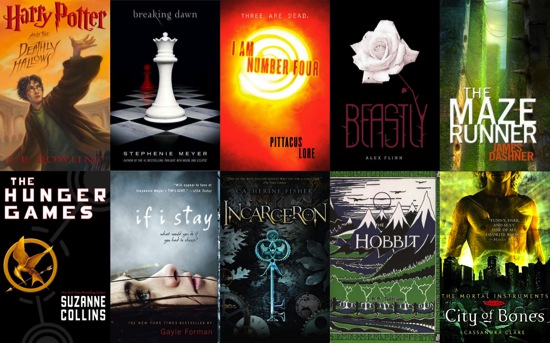
Next time you're at the bookstore (or at your bookshelf) examine which covers entice you and which ones turn you off. A nice fantasy or sci-fi cover always intrigues me, but the romance covers turn me off. That's okay, I'm not the target audience. It doesn't mean that I won't enjoy every single book whose cover isn't particularly exciting. It just means that I'll have to be introduced to those volumes through another source.

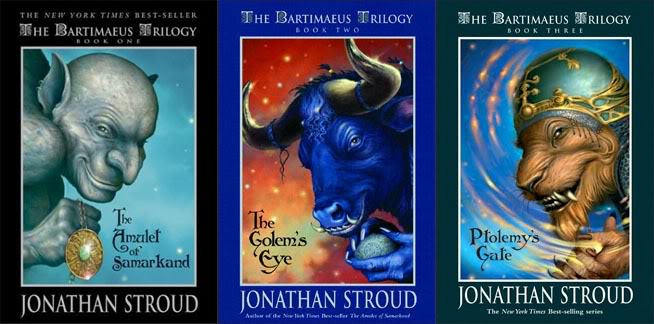
I'll end with a series that I was attracted to by the cover, the Bartimæus Trilogy. It had excellent payoff as well!


Tuesday, September 2, 2014

The Flaws of Harry Potter

This is a subject that many of my generation find blasphemous, but I assure you that this post is purely academic. It's a worthy pursuit to identify things that successful authors did poorly in order to avoid them. Let us begin.

The Goblet of Fire Plot Hole
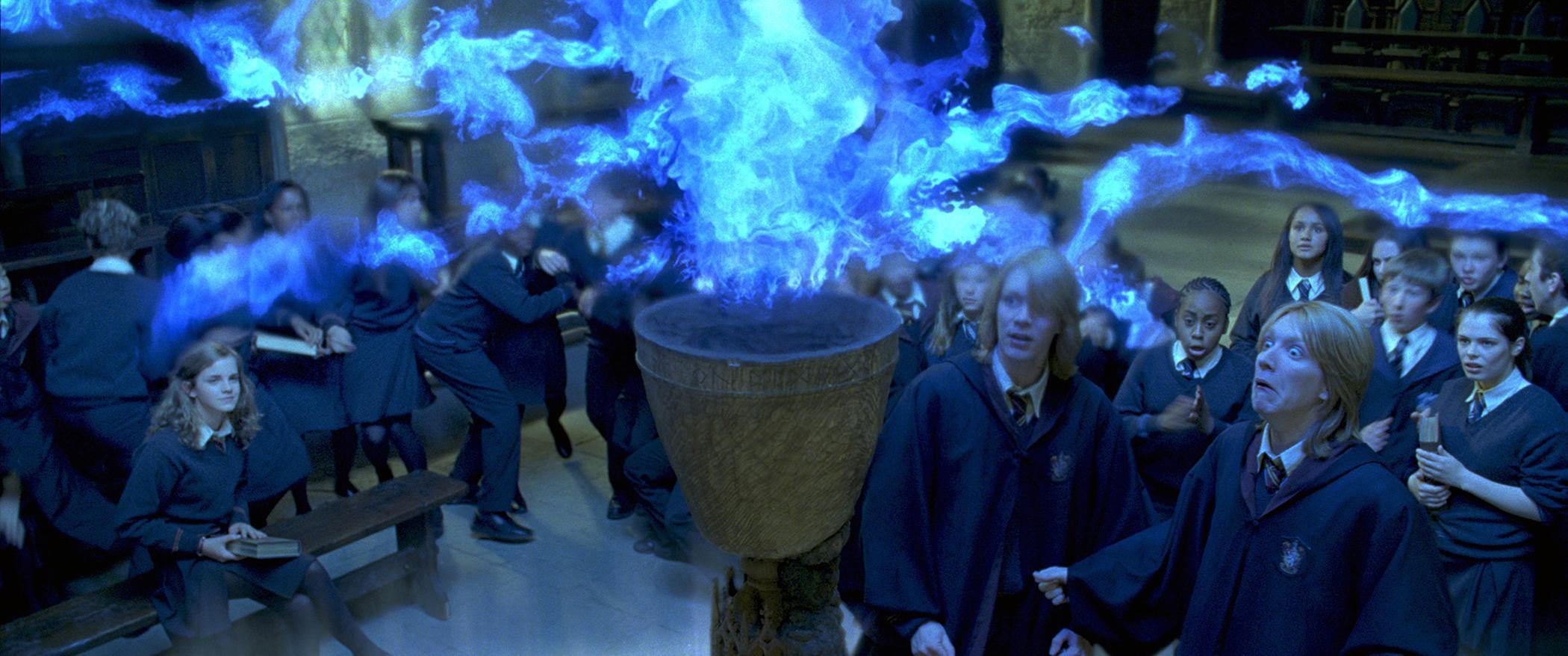
One of the most blaring mistakes of the Harry Potter series is book 4. The entire plot of the book rides on the idea that the Death Eaters have to get Harry to touch any object. That is to say, a portkey can be any object, and Harry just has to touch it outside the walls of Hogwarts. So instead of having a Death Eater come up to Harry at the Three Broomsticks and give him some present, they decide, "Let's make it one of the single most difficult objects to touch in the wizarding world."

Voldemort wants to kill Harry. But first he needs Harry's blood to be able to kill Harry. We need to keep him alive so we (or more specifically I) can kill him. I feel like a whole lot of trouble could be bypassed by just killing him, then resurrecting Voldemort. Maybe that was the Death Eaters' plan. Put Harry in the Triwizard Tournament and let him die accidentally. Or not, they seem pretty fawning. The point is, don't make an entire book based off a plot hole. Examine your characters' motives before making a plot (and after).
Hm, this picture appears unwilling to show up. It's rejecting my accio picture command. Another flaw of Harry Potter: I've never gotten any of the spells to work.

Time Travel
A classic way to fill your plot with holes is to introduce time travel. Now, Rowling tried to patch this up in book 5 by sending the time-turners into an infinite loop of getting knocked over, thereby rendering this useless. But that doesn't cover up the fact that they existed for a long time before then.

That means that for every crime committed, the Ministry could just take time turners, go back, and prevent it. Pretty useful, eh? Every single event that they weren't pleased with, they could revert time and change the course of events. For example, the murder of Lilly and James Potter. Why don't we go back and stop Voldemort, or at least warn the Potter's so they can flee? No, no, let's save Buckbeak. (I'm talking more about Dumbledore at this point.) The point is, don't introduce time travel unless you put limitation on it.

Voldemort: The Most Powerful Wizard in the UK
For how infamous and powerful the Dark Lord is, his reach doesn't seem to extend very far past the UK. I don't know that this is a huge flaw, but you'd think that a sociopathic megalomaniac would want to rule more than just one country. One might counter argue that he was still in the process of conquering the UK when he got zapped by Lily's love power. Not a flaw per se, but it just seemed like the villain had a relatively small vision to me.

Another issue with the geography of things is why did the Potter's feel the need to hide in the UK? I'm sure there are hundreds of other wizarding communities (where Voldemort has seemingly no reach) that would willingly hide them. But no, they decide to hide with the bomb instead of away from it.


The Magic System
So then there's the magic system. Rowling just kind of improvises new bells and whistles as she goes along. Then in later books she might completely ignore an element of magic that was so interesting in previous books.

It also seems as if you could just learn Latin and become a master wizard. Why don't they teach Latin at Hogwarts (I mean, they do, but it's broken up). And who decides when you can make new spells? Snape just kind of comes up with a sinister, powerful one as a student. Why hasn't Hermione made a list of her own inventions?

Why do spells have to be generated from the wand? Powerful wizards don't have to use a wand to channel their magic. Why, then, couldn't they originate a spell right in front of someone's face?

Another qualm I had was how Harry only learned like 3 spells his entire 6 years at Hogwarts. I expected him to become a great wizard. In the end, he won off a fluke of wand ownership. Rowling defined dueling magic as the quickest and wittiest wizard will win. But instead of using that definition, she had Harry win because one time he disarmed Malfoy. It was clever, but I didn't feel it was terribly satisfying.

Love Magic (Sacrificial Protection)
Ah, perhaps one of my biggest issues. The love magic. Rowling uses an a priori assumption that love trumps all, but never goes into too much detail. The basic rules of love magic, or sacrificial protection, are die for somebody and they get arcane protection against your killer. So my question is this: why is Harry so revered? Has no one ever sacrificed themselves before? This sounds like a documented phenomenon, yet the entire wizarding world seems oblivious to the fact, naming him The Boy Who Lived. I find it hard to believe that so few wizards have ever sacrificed themselves that the entire community views this as incredible.

And the second part comes when Harry invokes the powers of Sacrificial Protection. He goes to Voldemort who kills him. Then all the good guys back in Hogwarts are protected from his (and somewhat from his cronies') magic. But here's the thing: Harry didn't die. Dumbledore explicitly states this. If he did die then it would be breaking the Rule Against Resurrection when he came back.

But that means that you don't actually have to die in order to access the Love Magic. So another question that gets brought up is are there other acts of love that would activate the Love Magic? I suppose we'll never know.


Other Random Flaws
The Potter universe also seems to completely disregard the existence of modern weaponry. That was likely on purpose, but Harry and Hermione lived with muggles for years before learning about magic. Of course they know about guns, planes, bombs, tanks, etc. Why doesn't Harry keep a glock on him for the next time he meets Voldemort? Imagine the battle in the fourth book: their wands connect. Voldemort is distracted. Harry pulls out a 9mm and pops a cap. It's suddenly a 4-book series.

In the telling of the Deathly Hallows, we learn that one can hide from Death with the invisibility cloak made by Death himself. But somehow a group of teenagers made a map that can see through it. Perhaps Death should have hired the marauders.

Liquid luck, or felix felicis, will purportedly give the user a perfect day. Why didn't Harry and the gang brew some of that up and down it once they came up against Voldemort?

Another thing that was always an issue for me was that when Harry said a phrase that closely resembled Diagon Alley (maybe even how some dialects would pronounce it), he was transported to a place called Knockturn Alley. Diagon, Knockturn. Di, Knock. Is magic so stupid that it can mistake the two?

This isn't exactly a flaw and was touched upon above, but what's the deal with wizards outside of the UK? We see a bit of that in the 4th book with the two visiting schools and the World Cup, but what about continents beside Europe? I understand this topic is briefly discussed in non-series books that I haven't read, but you think there'd be more of a mention. What did wizards of the Plains Indians do in the early second millennium? What about Mayan wizards? Aborigine wizards? African? It's not vital to know, but it would have been nice if the topic were addressed. It could come in a passing comment by Hermione. "We can't reveal ourselves, Ron. The ancient wizards of Mesoamerica did just that and they ended up controlling the people."


In Conclusion
All in all, the books are fantastic. This was merely an exercise to show how even great authors can forget elements they introduce and leave loose ends. They can get caught up in a story and not realize that the plot they're writing is unnecessary. They forget motives. They make a priori assumptions. They ignore facts. They capriciously make and break rules. And we loved it. This is not a ticket to go and do all those things

Sunday, August 31, 2014

The Oneironauts Cover Art!

There won't be much in the way of sageness with this post; it's mainly to reveal the cover art that I've produced for The Oneironauts book 1. It took less than a day and I had to go through several iterations, but I came up with a cover art that I'm fairly satisfied with. I'm in the process of querying agents, and if I get a real publisher then they'll pay a real artist to do the cover. But just in case I decide to self publish, I'm prepared! Here it is:


Isn't it glorious? Now, I'm not really an artist. I can't produce anything aesthetic with a pencil. But I do know what I think looks good and I know how to Google things. I made this using GIMP 2.8 and Google. If you're interested, this is the picture that inspired my cover. Feedback would be appreciated, seeing as I can still change things. Tell me what you think!

Here's my first draft for comparison:


Oh, and for those of you who don't know, oneironaut is a word of Greek origin and of the same form as astronaut. Astronaut is Greek for star sailor. Oneironaut is Greek for dream sailor. My book is therefore about people who explore the dream plane.

(Edit 6/26/2015) I figured I might as well throw up the actual cover art :)


Friday, August 29, 2014

Building Up Your Repository of Awesome

In the process of coming up with a good plot, you may have encountered some difficulty. Maybe you're hypercritical of every idea you get. Maybe you designed a plot only to realize that it's not particularly interesting. Maybe you always get halfway and then peter out. Allow me to introduce you to a system that you hopefully already utilize.

I call it the Repository of Awesome. It's essentially a document you keep (on MSWord, GoogleDocs, &c.) where you dump all the cool ideas you get. For me personally, I have a section for concepts (philosophical points), lines to use, settings, characters, points of action/conflict, and a miscellaneous category. I have a general document that can be harvested from for all my books, and I have book-specific documents. For example, in the repository for The Oneironauts, I have a list of forms for the Consortium Oneirautis. That was important for that specific book, but not really useful in my other works.

Show Me How It's Done
Where do you look for sources for this Repository of Awesome? Basically everywhere. Movies, books, sites you visit, people you interact with. You liked the idea of a clandestine magical institution from Harry Potter? Great, write it down. You liked the excavation labor camp from Holes? Write it down. Thought the idea of humans interacting with a pantheon of gods from Percy Jackson was cool? Put it on the list. How about the sudden death survival tournament from Hunger Games? Note it.

Source: Dead Darlings

Now this is where the magic happens. Combine your ideas. Let's see... A young man is enslaved at a labor camp in some remote mountains. There are dueling tournaments once a month. They select several random inmates and have them fight to the death. The last ones standing get spirited away. Protagonist is selected for the tournament and wins. Turns out they get taken to a secretive monastery/school where they are taught magic directly from the gods. They then get placed in society where they serve as vassals for the gods. A group of former graduates has rebelled and is planning a coup against the gods. Our protagonist has to decide whether he wants to join the resistance or the establishment.

See? I literally churned out those two paragraphs of ideas and then plot in less than 8 minutes. I'm not saying it's the best plot ever invented, but it's entirely different from the four sources I drew upon and slightly catchy. I promise that you can create amazing plots by amassing all your awesome ideas and combining them. Remember that good conflict is going to be the most crucial part of your plot. I would give you some examples from my own writing, but it's not published yet, so I'll wait.

I would also like to point out that if you have an okay plot already but you don't think it's up to snuff, treat it as an extended idea. Then take other ideas from your Repository and layer them together.

Your ideas are mostly just seeds and will flourish as you actually write the book. I had the original idea of "shared dreaming school" and it evolved immensely over the time that I wrote The Oneironauts. Another thought that I had was "what if one of the characters was in a coma?" Obviously that specifically applies to the dreaming books and isn't so much a general idea, but it ended up becoming an entire subplot in my book. I hope you can do the same.

Tuesday, August 26, 2014

The Everbranching Tree of Plots

Ten years ago, an idea was introduced to the world called the Seven Basic Plots. It came in the form of a book written by journalist Christopher Booker. He posited that there were only—as the precocious reader will have already observed—seven basic plots. Every other story is based off this brotherhood. He tells us that they are
  1. Overcoming the Monster (Lord of the Rings, Star Wars)
  2. Rags to Riches (Cinderella, Aladdin)
  3. The Quest (Lord of the Rings)
  4. Voyage and Return (Odyssey, Alice in Wonderland)
  5. Comedy (A Midsummer Night's Dream, Mr. Bean)
  6. Tragedy (Macbeth, Romeo and Juliet)
  7. Rebirth (A Christmas Carol, Despicable Me)
*As a side note, I think that if you wanted to you could lump most of them into Overcoming the Monster.

Well I'm going to present my new thesis: there's only one plot, i.e., Something Happens. It holds true in every book I've read or movie I've seen. This superplot can be subdivided though. In many stories not only does something happen, but more specifically, the protagonist progresses. The other two options are remaining stagnant or retrogressing. All of the above seven plots are composed of the three I just mentioned. That means there are at most three basic plots.

But "he progresses" doesn't exactly make for the most exciting plot. It needs an arc. The bones of a plot might follow something like this: he progresses, stalls, progresses, stalls, retrogresses, progresses, retrogresses, progresses. Maybe you could even assign values so you know how much the protagonist is stepping forward or backward. Let's analyze the Bible story Jonah this way. He's preaching as a prophet of Jehovah (+10). Gets a vision to go to Nineveh (+5). Decides to run and hide from God instead (-15). Get swallowed by a great fish (±0). Repents and preaches in Nineveh (+15). Stubbornly waits for the city's destruction after they repent (-15).

Beyond the Basics
But who wants a basic plot? Like a drug, we need more and better stuff to stay satisfied. Most plots that I've read in the past ten years go above and beyond basic. They've also been combinations of the above seven. They've been intricate weavings of human emotion and action. 
Source: Tim Green
This post may not have the best flow to it, but I hope it gets my point across. If you believe there are only seven basic plots, your writing will show it. Don't buy into it. Look everywhere for inspiration for books. Write down small ideas you have. Combine those ideas to make more elaborate tales. Don't let your plot look too much like another, but allow it some similarity. The tree of plots is an everbranching organism with unlimited possibilities.